Summary
Your marketing manager just built an app. So did someone in finance. And three people in operations. None of them are developers. All of them used AI.
Welcome to the age of "vibe coding" - where anyone with a ChatGPT subscription can conjure up working software in an afternoon. It's genuinely impressive. It's also creating a mess that someone's going to have to clean up.
That someone is probably you.
What is Vibe Coding?
The term was coined by Andrej Karpathy (former Tesla AI director) to describe a new way of building software: you describe what you want, an AI writes the code, and you iterate based on vibes rather than deep technical understanding.
"You just see stuff, say stuff, run stuff, and copy paste stuff, and it mostly works."
- Andrej Karpathy
It's not entirely wrong. For quick prototypes, personal tools, and "good enough" solutions, vibe coding is remarkable. A non-technical person can now automate their workflow, build a dashboard, or create a simple app - things that would have required hiring a developer just two years ago.
But here's where it gets messy.
The Genuinely Good Part
Let's be fair - vibe coding isn't all bad. It democratises software creation. It lets domain experts build tools without waiting six months for IT to get around to it. It closes the gap between "I wish I could..." and "I actually can."
For small, contained problems, it's brilliant:
- Automating a repetitive personal task
- Building a quick prototype to test an idea
- Creating a one-off report or analysis
- Learning how software works by doing
The problem isn't that people are building things. It's what happens next.
The Hidden Risks Nobody Talks About
Here's what happens when vibe-coded tools escape into the wild:
Operational Risk
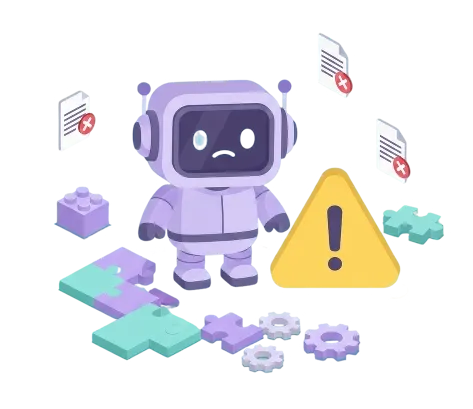
Nobody understands how it works. The person who built it can't explain it. When it breaks (and it will), there's no documentation, no tests, no one who knows why it does what it does. It just... vibes.
Security Gaps
AI-generated code often contains vulnerabilities. It might store passwords in plain text, expose APIs without authentication, or be vulnerable to injection attacks. The builder doesn't know to check. The code doesn't care.
Technical Debt
Vibe-coded solutions are quick and dirty by design. No error handling. No edge cases. No scalability. What works for 10 users explodes at 100. What handles normal inputs dies on anything unusual.
Knowledge Silos
The marketing team's tool doesn't talk to finance's tool. Operations built something that duplicates HR's data. Everyone's got their own little kingdom - none of them connected.
The Silo Problem Gets Worse
Here's the thing nobody's talking about: vibe coding doesn't just create bad code. It creates more silos.
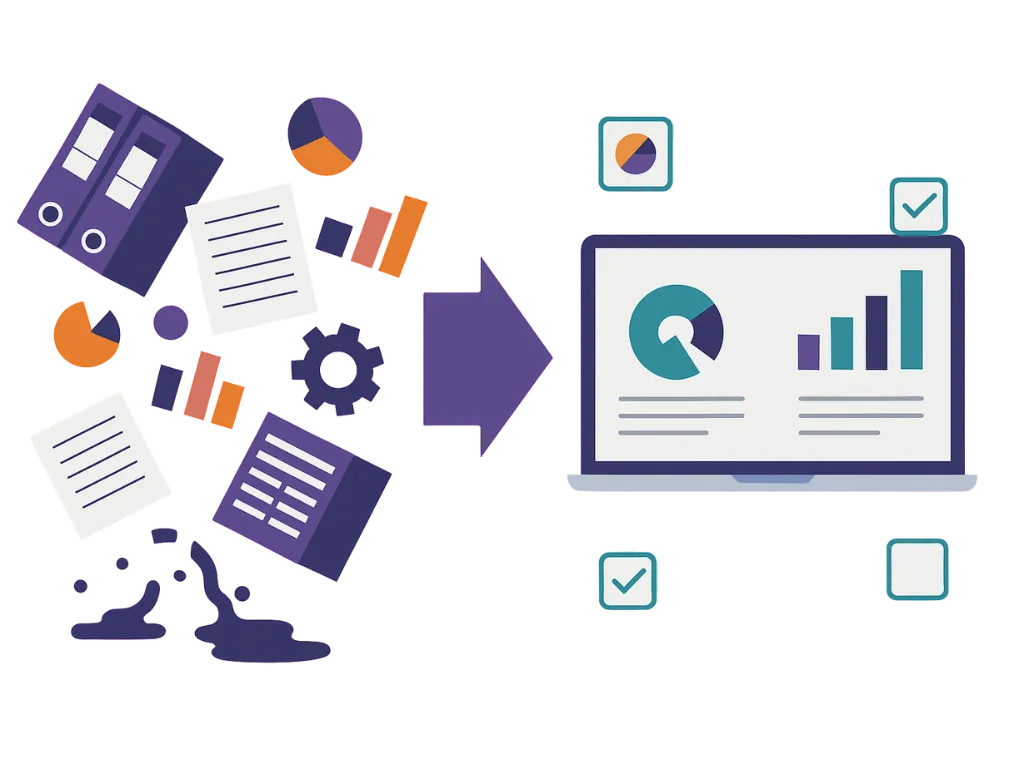
Before, you had maybe three or four core systems that didn't talk to each other. Now you've got those same systems, plus dozens of AI-built micro-tools scattered across the organisation. Each one is its own little data island.
Your Organisation's New Reality
Dashboard
Automation
Tracker
Workflow
CRM Hack
Each tool has its own data, its own logic, its own blind spots. None of them talk to each other. Sound familiar?
Marketing's AI dashboard pulls from one data source. Finance's automation uses another. HR's tracker has its own copy of employee data that's already out of date. Operations built something clever that duplicates half of what sales already has.
The promise of AI was to break down barriers. The reality of vibe coding is often to create more of them.
So What Do You Actually Do About It?
The answer isn't to ban vibe coding. That's like trying to ban spreadsheets in the 90s - it's already happening, and trying to stop it just drives it underground.
The answer is to embrace the creativity while managing the chaos.
A Pragmatic Approach
Create a registry. Know what tools exist, who built them, and what data they touch. You can't secure what you can't see.
Set guardrails, not roadblocks. Define what data is off-limits for vibe coding. Customer PII? Financial records? Those need proper controls.
Build bridges, not walls. Create integration points that let these tools connect properly. A central data layer that everyone can tap into safely.
Have an upgrade path. When a vibe-coded tool becomes critical, there should be a process to "promote" it to proper infrastructure.
Don't wait for the crisis. The time to think about this is now, not when marketing's dashboard brings down the finance system.
The Real Challenge: Connecting Everything
Here's where it gets interesting. The same AI revolution that's creating these silos can also connect them - if you do it right.
The tools your teams are building often share common data needs: customer information, product data, financial metrics, operational status. Instead of each tool having its own copy (that quickly becomes outdated), you need a layer that lets them all access the same trusted source.
This isn't about replacing what people have built. It's about giving those tools a common foundation. A shared data backbone that means marketing's numbers match finance's numbers match operations' numbers.
The alternative is what we're seeing now: proliferating tools, diverging data, and increasingly frustrated teams who can't understand why their numbers never match up.
The Bottom Line
Vibe coding is here to stay. Fighting it is pointless. But ignoring the risks is reckless.
The organisations that win will be the ones that harness this creative energy while building the connective tissue that keeps everything working together. That means:
- Visibility into what's being built
- Guardrails around sensitive data
- Integration layers that prevent silos
- Upgrade paths for tools that become critical
The good news? This is solvable. The bad news? It's not going to solve itself.
If you're seeing vibe-coded tools popping up across your organisation and wondering how to get ahead of the chaos, let's talk. We've helped businesses connect their systems before AI made it fashionable - and we know how to do it without breaking what's already working.
Xerini is an AI and data consultancy that helps businesses get actual value from their data - without the transformation drama. We built Xefr, a data orchestration platform that connects your existing systems instead of replacing them. Find out more or book a Lunch & Learn.